
Property Review
Review the home, roof, energy use, and project goals.

Anaheim, CA
Sunburst Solar installs residential solar panels and home battery systems for homeowners in Anaheim, with project details confirmed for the property, utility, and jurisdiction.
Review the home, roof, energy use, and project goals.
Confirm the applicable utility territory, local authority, and required project steps.
Compare solar-only and solar-plus-storage concepts when the property and goals support them.
Review assumptions, responsibilities, options, and milestones in writing.
Property-specific planning
Anaheim's municipal utility makes the service account part of the property review from the beginning. Confirm the parcel, roof and electrical conditions, current usage, permit requirements, meter arrangement, and APU interconnection path before discussing system size or storage.
Confirm City jurisdiction, roof planes, service equipment, household usage, meter configuration, and optional storage scope.
Use Anaheim property information and current permit guidance for an in-City parcel.
Coordinate the confirmed APU account with City inspection and the current municipal interconnection path.
Keep City permit records, final inspection, service-equipment details, meter work, and APU authorization together in the written plan.
System options
Start with the outcome you want, then evaluate the equipment and project structure that fit the property.

Review a rooftop solar concept around the property, household energy use, and current project requirements.
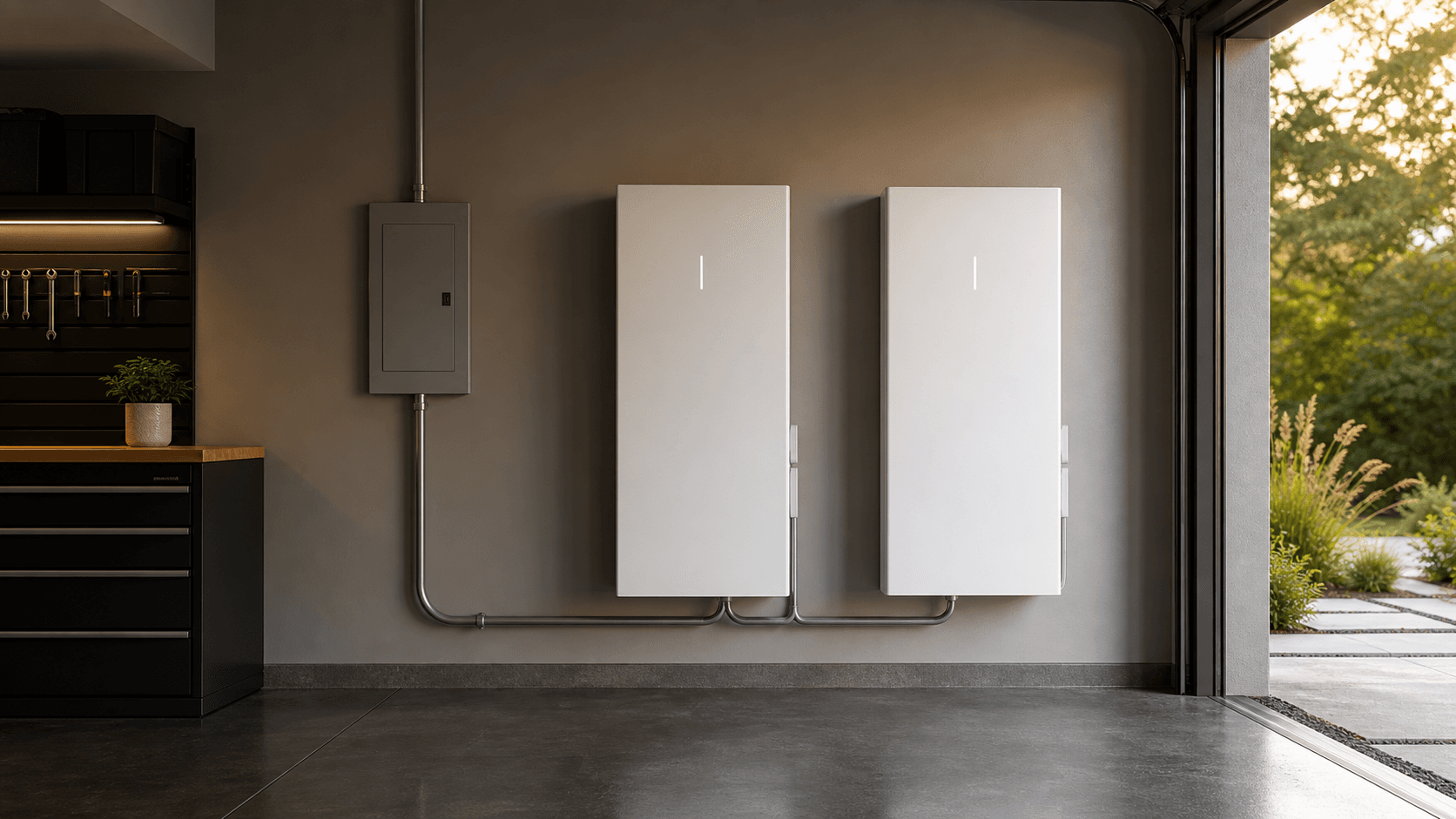
Evaluate optional storage around household priorities, compatible equipment, and the proposed solar design.
Project-specific cost review
A useful estimate separates the solar array from roof or structural work, service-panel and meter changes, City and APU review, optional battery storage, access, equipment, and payment terms. Current cost and savings require property and electricity-use inputs.
Review solar cost and savings factors, compare solar financing options, explore home battery storage, check current California programs, or request an address-specific project review.
Prepare the exact address, recent APU bills and usage history, roof age and known repairs, service-panel and meter details, ownership approvals, and solar-versus-storage priorities. The written proposal should identify City and utility responsibilities, assumptions, exclusions, and milestones.
Address-specific review
Anaheim combines City permitting with a municipal electric utility, so the property, service equipment, permit record, and APU interconnection path must be coordinated without treating either approval as automatic.
Confirm the parcel is within Anaheim before using City permit or Anaheim Public Utilities procedures; a nearby postal address may follow another authority.
Anaheim Public Utilities uses a municipal program rather than SCE's Solar Billing Plan. Verify APU service, current forms, meter requirements, and authorization for the address.
State and utility programs can change. Review the current California program sources before a program is included in a proposal.
Review current California programsA clear path
Each stage narrows the plan using property-specific information and current requirements.
Start with the property, contact details, and household energy goals.
Consider roof, shade, energy use, access, and the loads that matter most.
Compare a solar-only or solar-and-storage concept with documented assumptions.
Review responsibilities, requirements, options, and current project milestones in writing.
Anaheim FAQ
Address-specific answers for the first stage of a residential project review.
Confirm that the parcel is inside Anaheim and use the active account to verify Anaheim Public Utilities electric service. A nearby postal address does not establish City jurisdiction, utility service, system capacity, or project fit.
Roof condition and usable planes, electrical service and meter arrangement, household use, City permit documents, APU requirements, optional storage, equipment, and access shape the plan.
Anaheim requires residential solar to be permitted through Planning and Building and to satisfy Anaheim Public Utilities requirements. APU's current interconnection guidance directs applicable plans and single-line information through Electrical Engineering, while the residential solar page describes the current permit, installation, inspection, and meter path.
Optional storage can be evaluated after reviewing priority loads, electrical capacity, equipment compatibility, placement, City requirements, and APU rules. Solar panels alone do not establish backup capability or a specific runtime.
The California parent page maintains official consumer guidance. Anaheim Public Utilities separately publishes its municipal solar and metering information, which should be rechecked for the service account before project assumptions are written.
Review current California programsAnaheim Public Utilities currently describes a municipal NEM 2.0 program rather than the investor-owned-utility Solar Billing Plan. The account status, current tariff, export treatment, meter requirements, and any existing-system history must be verified before financial assumptions are made.
Electricity use, planned system size, roof condition, structural or electrical work, City and APU review, meter or service work, optional storage, access, equipment, and payment terms can affect cost. Current pricing and savings require an address-specific design.
Timing varies with property review, design, any required APU engineering review, City permits and inspection, meter work, equipment, and scheduling. The written plan should identify current steps without promising a fixed turnaround.
Request a free solar installation quote based on your property, energy use, and goals.