
Energy and load profile
Review electricity use, operating hours, utility rates, interval data, and demand-charge exposure.
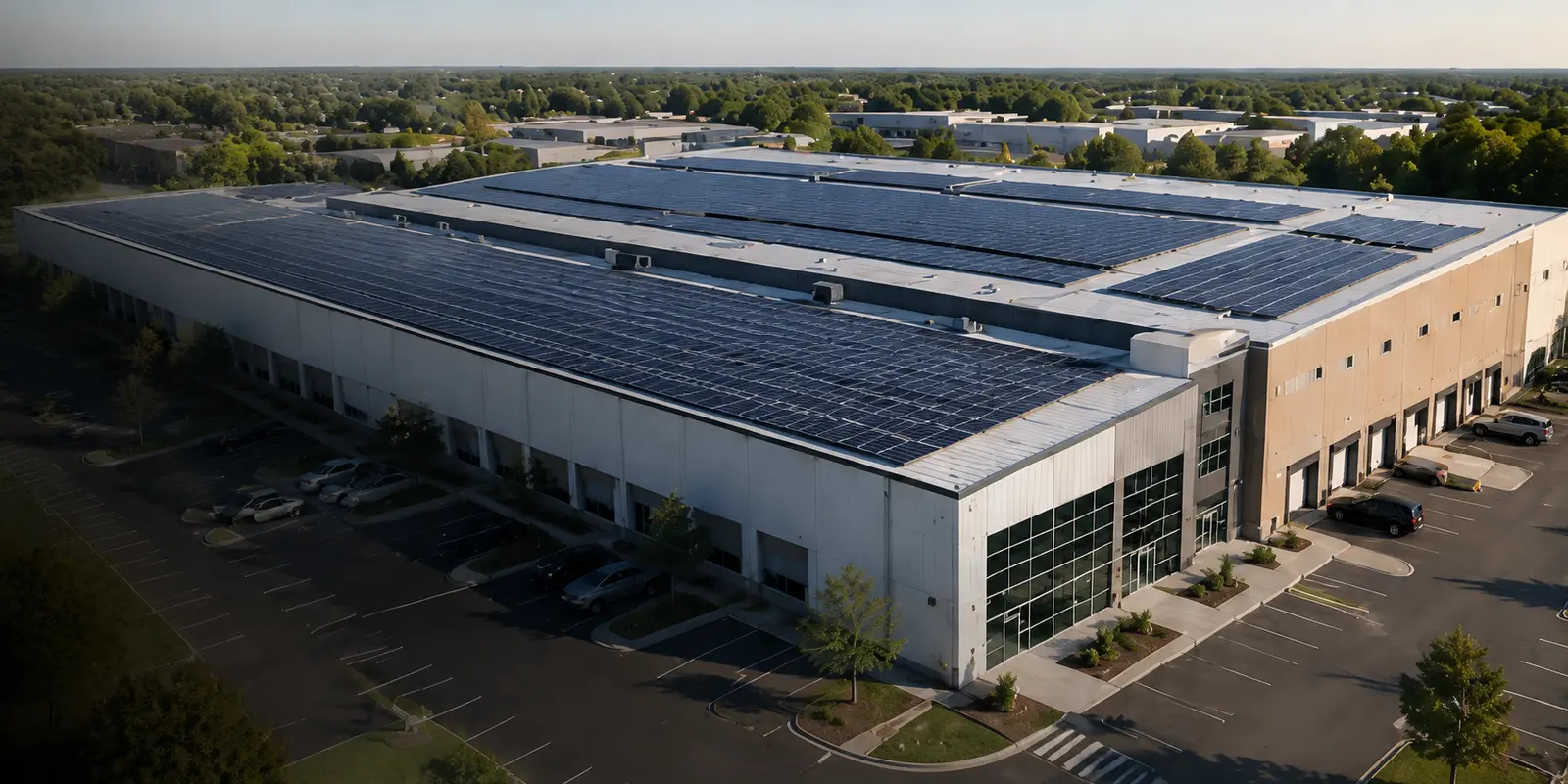
Commercial solar installation
Evaluate rooftop, ground-mounted, carport, and battery-storage options around your property, electricity use, operating priorities, and financial goals.
Commercial project inputs
Review electricity use, operating hours, utility rates, interval data, and demand-charge exposure.
Screen roof, land, parking, structure, access, drainage, and the space available for equipment.
Identify service conditions, interconnection needs, controls, and compatible solar or storage paths.
Coordinate jurisdiction, ownership, financing, tax review, documentation, and proposal requirements.
Solar and storage options

Use available roof area while accounting for condition, structure, drainage, fire access, and replacement timing.

Evaluate open land with zoning, setbacks, grading, drainage, site access, and interconnection in view.

Use parking areas for generation while coordinating traffic, structure, lighting, drainage, and accessibility.

Assess storage for demand goals, solar self-consumption, or selected-load resilience under an approved design.
Learn more about commercial battery storage, compare commercial solar financing options, or review the areas Sunburst currently serves.
Current federal guidance
Eligible commercial clean-electricity projects placed in service after December 31, 2024 may qualify for the Section 48E Clean Electricity Investment Credit. Current IRS guidance lists a 6% base amount and an increase of up to five times—up to 30%—when applicable prevailing-wage and registered-apprenticeship requirements are met. Eligibility-dependent domestic-content and energy-community additions may also apply. A taxable business may also need to evaluate transferability and project ownership with its tax and legal advisers.
Eligible tax-exempt organizations—including qualifying nonprofits, churches, houses of worship, governmental entities, and certain other organizations—may be able to use elective pay, commonly called direct pay, even when they do not owe federal income tax. The organization generally must satisfy the underlying credit rules, own the eligible property, complete IRS pre-filing registration, and make the election on a timely filed tax return.
Credit eligibility and value are not automatic. Placed-in-service dates, ownership, technology, prevailing-wage and apprenticeship rules, domestic content, energy-community status, transferability, elective-pay registration, filing deadlines, documentation, recapture rules, project timing, and current law can affect the result. Sunburst Solar does not provide tax or legal advice; confirm current requirements with qualified tax and legal professionals before relying on a credit or payment.
Purchase, loan, lease, and power purchase agreement structures can assign ownership, tax treatment, maintenance, transfer rights, and long-term obligations differently. Availability and terms depend on the customer, provider, property, project, and timing. Review current solar incentive updates before relying on a particular path.
How it works
Share the property, utility account, operating priorities, ownership context, and the goals to evaluate.
Review bills, available interval data, roof or site information, electrical details, and known constraints.
Compare suitable configurations, interconnection factors, ownership paths, and project-specific requirements.
Document the proposed scope, assumptions, exclusions, responsibilities, and items that require confirmation.
Commercial solar questions
A useful first review covers the service address, utility account and rate schedule, recent bills, operating hours, ownership or lease context, available roof, land or parking area, electrical information, project goals, and known construction constraints.
Cost depends on system scope, site access, structural and electrical work, equipment, labor, permitting, interconnection, civil work, storage, timing, and the selected ownership or financing structure. Property-specific information is needed before a responsible estimate can be prepared.
It may in some circumstances. The answer depends on the utility tariff, interval load shape, timing of the facility peak, solar production, controls, storage, and operating conditions. No demand-charge or savings result is guaranteed.
Eligible tax-exempt organizations, including qualifying nonprofits, churches, houses of worship, governmental entities, and certain other organizations, may be able to use elective pay for an applicable clean-energy credit. The organization and project must satisfy the underlying credit, ownership, registration, documentation, filing, and current-law requirements.
No. Storage is a separate decision based on load profile, tariff, resilience priorities, compatible equipment, controls, space, fire and safety requirements, and the approved electrical design.
Requirements vary by property and jurisdiction. A project may involve building, electrical, fire, zoning, structural, stormwater, accessibility, utility interconnection, and equipment-location review before construction can proceed.
It should identify the proposed configuration, equipment assumptions, estimated production method, scope and exclusions, price or payment structure, responsibilities, schedule assumptions, warranties, and the utility, permitting, tax, and site items still subject to confirmation.